


The energy transition is forcing local authorities and industrial operators to rethink their energy supply strategies. They face numerous interdependent challenges: meeting regulatory decarbonisation requirements, keeping costs under control amid market volatility, making use of local energy resources, and modernising existing infrastructure.
In this context, identifying and tapping new sources of renewable and recovered heat, and finding ways to integrate them into current distribution infrastructure, strengthens the resilience of local areas and accelerates their energy transition. Safeguarding investments requires highly specialised technical expertise, an overarching view of energy systems and reliable studies.
The challenges of decarbonisation and controlling thermal costs
Comprehensive engineering to transform thermal networks
We are involved in heating and cooling network projects throughout their entire life cycle, taking technical, economic and regulatory considerations into account.
1. Infrastructure diagnostics and audit
Analysis of existing infrastructure (urban and industrial networks, water treatment facilities) to assess performance, equipment condition and heat losses. Energy, organisational and management audits pinpoint areas for technical, operational and contractual improvement. For new projects, the study examines the local context, energy needs, development plans and the local resources that can be mobilised: geothermal energy, biomass, waste heat, data centres, and heat recovery from wastewater using ENERGIDO®.
2. Master plan and energy strategy
Development of master plans that factor in needs, resources and scenarios for expansion, densification or interconnection. This includes sizing the infrastructure, comparing technical solutions (high or low temperature, heating/cooling reversibility, interconnection) and optimising development strategies.
3. Feasibility and integration studies
Carrying out feasibility studies for connections, extensions, new networks and facility modernisation. This includes integrating renewable and recovered energies (biomass, geothermal energy, heat pumps, waste heat, cogeneration), as well as identifying and recovering waste heat at industrial sites.
4. Digital modelling and simulation
Simulation of the thermo-hydraulic operation of networks to analyse loads, heat losses, the energy mix, control systems and the renewable energy coverage rate. Scenario analysis (including N-1 mode) assesses resilience and optimises energy performance.
5. Economic and financial structuring
Development of business plans incorporating CAPEX, OPEX, pricing and management models (direct management, public service delegation, PPP). Economic viability is assessed by drawing on funding schemes (ADEME Heat Fund, energy savings certificates (CEE), grants), with support for project owners in their operating strategies, continuous improvement and energy management (ISO 50001).

Why choose us

Expertise grounded in operations
Maintenance, performance and service continuity requirements are built into the design from the outset, drawing on the experience of the Veolia Group, which operates over 700 heating and cooling networks.

Integrated technical and economic approach
Every technical and financial parameter (CAPEX, OPEX, IRR and LCOE) is assessed to safeguard investment decisions and ensure the installations are viable.

Full project management
End-to-end support, from the study through to commissioning, taking regulatory, technical and economic aspects into account at every stage of the life cycle.

Making the most of local resources
Mobilisation of local energy resources to significantly reduce dependence on fossil fuels and improve environmental performance.
Our flagship projects
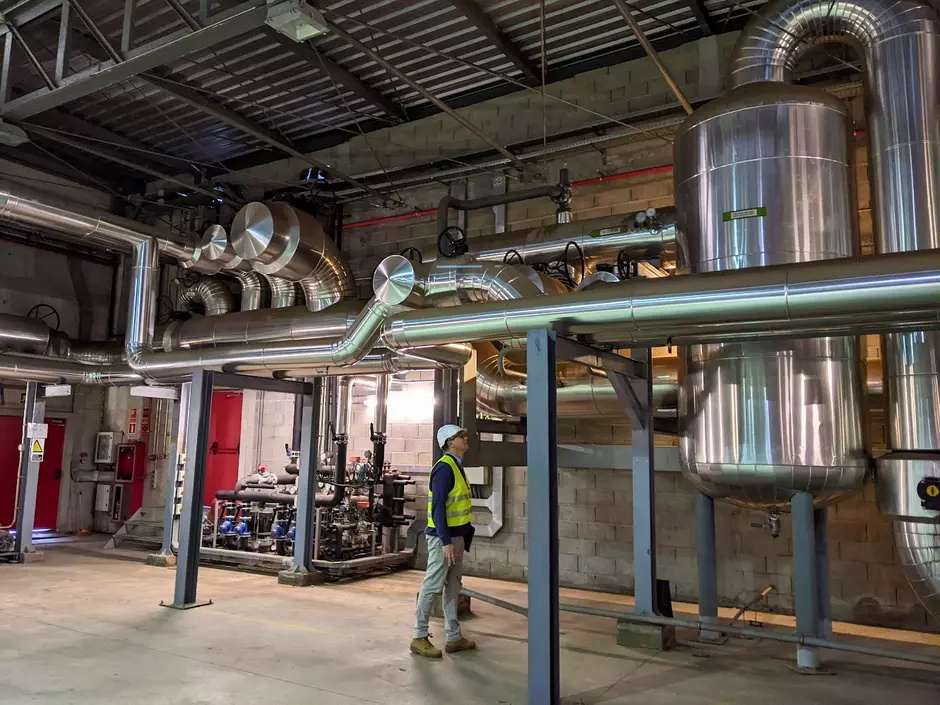
Optimising the interconnection of thermal networks in Spain
In Barcelona, we modelled two heating and cooling networks to optimise their interconnection. Combining GIS and weather data with multi-sectoral requirements (industry, residential areas, commercial spaces and data centres), our experts simulated various operating scenarios to maximise overall energy efficiency and improve service resilience.
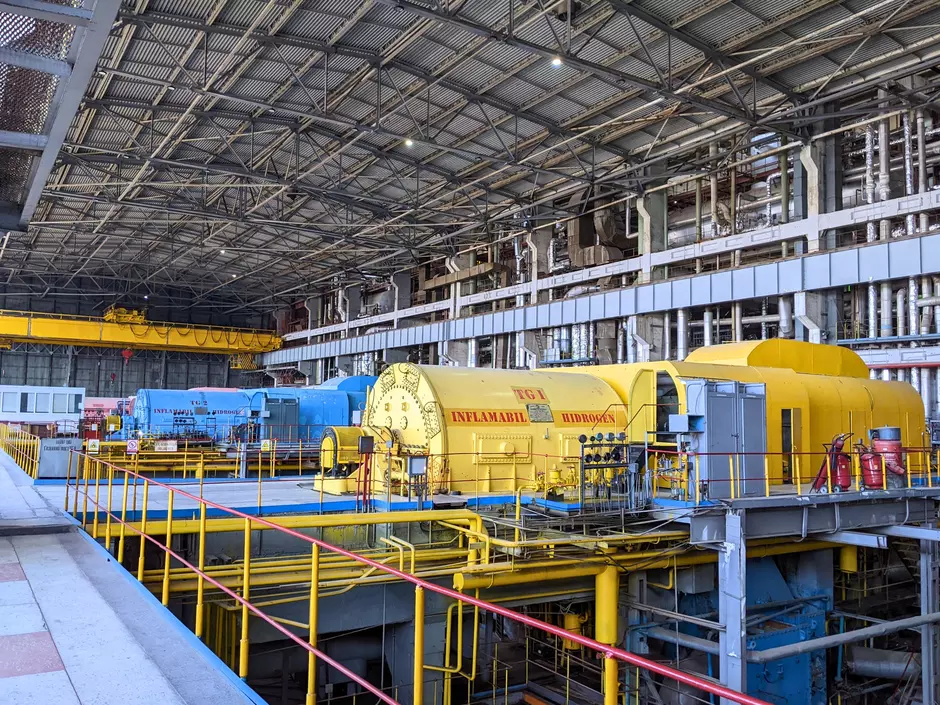
Thermo-hydraulic modernisation of the Chișinău district heating network in Moldova
We carried out a feasibility study for the Termoeléctrica operator, aimed at optimising the district heating and cogeneration network as a whole. Our thermo-hydraulic modelling enabled us to plan the extension of the infrastructure, and the deployment of a SCADA system now keeps electricity production and heat demand in balance.
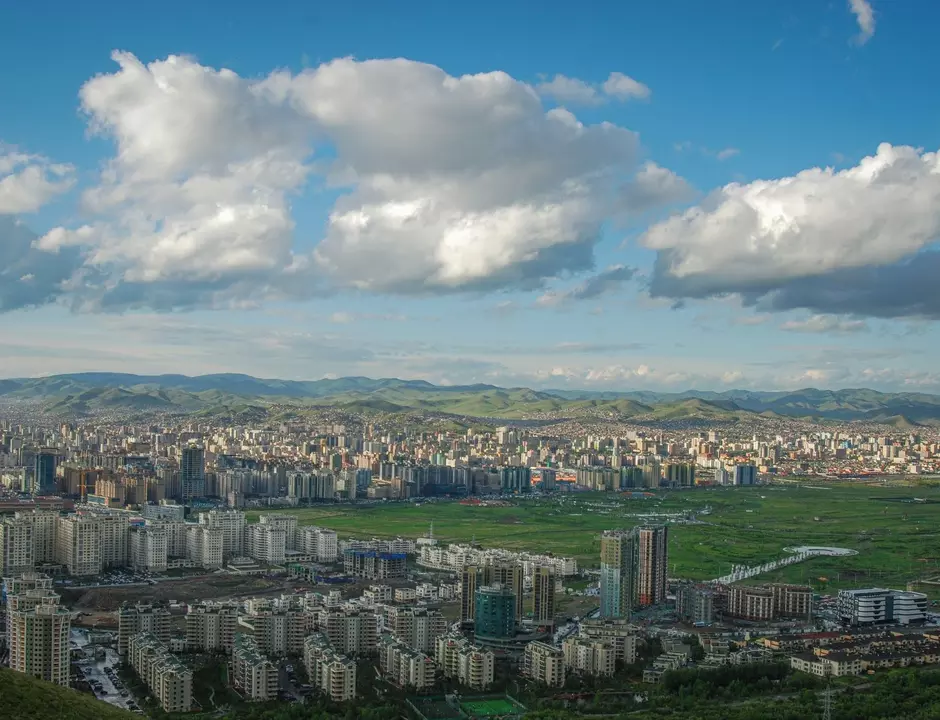
Transformation of a district heating system in Mongolia
In line with World Bank standards, we developed a three-year priority investment programme to modernise the Ulaanbaatar district heating system. We also drew up a plan to reorganise local stakeholders in order to improve cash flow, reduce debt and strengthen the system's capacity for self-financing.